Friday, May 11, 2018

Birding at Camille's House

   We left heading for Nashville to celebrate my niece's graduation. My sister let us stay at her place. After storing our gear in a room full of teddy bears, Berry and I walked from the house to a shed at the end of the yard. This farm is situated on a hill inside a deciduous forest. A Red Headed Woodpecker (Melanerpes Erythrocephalus) swooped down from a tree and flew across our path. We saw the white patches on its wings in flight. The birding had begun.

   To our left, a blue male Indigo Bunting (Passerina Cyanea) flew out of the bushes and hovered briefly, flapping his wings vigorously to remain in one spot. This was classic fly-catching behavior. It found an insect and flew back into the bushes. We listened carefully and heard the liquid, waxy whistle of the Indigo Bunting (Passerina Cyanea) which we had heard recently in beautiful Vicksburg, Mississippi.

   The celebration that night was a huge gathering of our extended family. We were served a choice of Barbecued Chicken or Lamb with Mint Jelly. It was great to see everyone when it was not either Thanksgiving or Christmas. A good time was had by all.

   The next morning, my brother-in-law and I got on his Mule ATV and toured his property. We discussed the different birds he might find on his property. He stopped before an open field and looked for birds. There was a Yellow Throated Vireo (Vireo Flavifons) perched on a sapling to our right. It is a yellow warbler with a white and gray rump. I shared my binoculars with my brother-in-law, so he verified this sighting. The bird immediately flew to our right, back into the woods. This is the first time Robert had ever seen the Yellow Throated Vireo (Vireo Flavifons), so this was a "Life Bird" for Robert. At another clearing, we spotted a Summer Tanager (Piranga Rubra) perched on an electrical pylon. Berry was sure to be jealous that she did not come along on this tour of the property.

   My sister and her husband live along the Natchez Trace near Nashville, Tennessee. After breakfast, we took her corgis to the "Timberland Park" and walked them. They are quiet dogs, so we could still bird, without them disturbing the birds. We immediately heard the song of the Eastern Wood Pewee (Contopus Virens), which sound like it is saying, "pee-wee", like its name. Deep in the woods, we heard the beautiful flute-like song of the Wood Thrush (Hylocichla Mustelina).

Here is a List of the Birds we saw at Camille's House
  • Indigo Bunting
  • Yellow Throated Vireo
  • Wild Turkey
  • Red Headed Woodpecker
  • Eastern Bluebird
  • Eastern Wood Pewee
  • Wood Thrush
  • Bluejay
  • American Robin
  • Summer Tanager
  • Carolina Wren
  • Turkey Vulture
  • Black Vulture
  • Red Tailed Hawk
  • Brown Thrasher

   We left them at the park and drove down the Natchez Trace to Leiper's Fork. There were cute shops and an art gallery there. We stopped at Puckett's for a bite, then headed back to Memphis.

Robert and Berry

Photos courtesy of rfowler, wikipedia

Saturday, May 5, 2018

Birding the Old Forest State Natural Area

   For breakfast, my wife ate a homemade Apple Turnover. The pieces of apple had been diced small so that the apple would bake correctly and be soft, but not mushy, the way Berry likes it. Robert had his usual bowl of fruit. This was a Saturday. We decided to go birding. Robert suggested Overton Park in midtown Memphis. This is a large urban park with a nine hole golf course, an Art College and a municipal Zoo. Part of the park is a beautiful deciduous forest, deep and heavily clogged with underbrush. We pulled the bird-mobile to the curb near the golf course and parked the car. It was only then that we noticed that the name of the forested part of the park had been changed. It is now called "The Old Forest State Natural Area".

   In the park, we started birding by walking on a paved road. Berry spotted the first bird we saw to the right of the road in the branches of a tree. Robert used his binoculars to identify it as the Yellow Rumped Warbler (Setophaga Coronata). He saw a brownish gray warbler scrambling from limb to limb. What made the identifiction was a bright yellow spot on the rump of the bird. We also saw this little fellow in Mexico when we birded the Yucatan Penincula in October of 2006.

   We turned away from the paved road and started walking carefully along the side of the fairway of the fourth hole. There were Indigo Buntings (Passerina Cyanea) and Northern Cardinals (Cardinalis Cardinalis) playing on the green of hole number four. The Cardinals say "purdy, purdy, purdy..." The Indigo Buntings have a very distinct, liquid whistle. We stood still and watched them putt. When it was time to play through, Robert spotted a small flycatcher, perched on a bare limb on a sapling. He had just found a Least Flycatcher (Empidonax Minimus). This handsome flycatcher was our bird of the day.

   We walked through the woods to the green on hole number two. We saw a lot of other birds during this short birding trip, and lots of dogs. It is primarily a city park, so the dogs were all on leash. It started to rain. To avoid the sprinkles, we walked to the car. It stopped sprinkling just as it had started. We gave up and drove to a restaurant and ate lunch.

Robert and Berry

Photos courtesy of rfowler, allaboutbirds, dpancamo

Saturday, April 28, 2018

A Saturday at Wapanocca

   It was Robert's idea this time to go birding on Saturday. Berry offered to "flesh out the idea" with a specific destination. She came up with Wapanocca National Wildlife Refuge, in eastern Arkansas. Great idea ! Berry enjoyed a Breakfast Taco filled with scrambled eggs, diced ham and two types of cheeses. Robert ate a bowl of delicious fruit. We were off.

   The Wildlife Refuge at Wapanocca is a large swampy area surrounding a small fishing lake. The first flying things we noticed in the swamp were a Dragonfly and a Monarch Butterfly. Then, Robert spotted a Brown Creeper (Certhia Americana), clamoring around the underside of a branch, holding on to the branch, upside down. A Brown Creeper is a version of Nuthatcher, of which we have three here. The Brown Creeper is a cute little woodland acrobat.

   We saw our first Eastern Kingbird (Tyrannus Tyrannus) of the season, sitting on a small sapling in an open field, along side a gravel road. Each Spring, Kingbirds migrate to the Midsouth from Peru in Latin America. We identify the Eastern Kingbird by looking at its collar and the end of its tail. The white tip of the tail looks like the bird has been dipped in a bucket of white paint. The Eastern Kingbird is very majestic looking.

   Spring is an interesting time for birding. Many birds put on their "courting clothes"; their feathers change colors and the pattern of colors changes. We have seen Palm Warblers (Setophaga Palmarum) many times in our own backyard, in the summertime. Today we saw the Eastern version of the Palm Warbler in its breeding plummage. He was very handsome and I hope he has some luck attracting the lady Palm Warblers.

   Today, we saw large flocks of Indigo Buntings (Passerina Cyanea) all over the refuge. They swelled up in the road as we drove along. Then, Berry saw a bright flash of orange at the top of a tree. It was a male Baltimore Oriole (Icterus Galbula). His bright orange and black colors are an indication that Spring has arrived.

   There are many species of Sparrows, so we have to examine them very closely to identify them. Today, we saw four Chipping Sparrows (Spizella Passerina) in the tall grass on the side of the road. Chipping Sparrows are widespread and fairly common across most of North America.

   We are always on the lookout for Woodpeckers. Today, we saw a Yellow Bellied Sapsucker (Sphyrapicus Varius) flying across the road. The central part of the bird's belly is subtly tinged with a pale yellow color, which is sometimes difficult to see. We spent some time looking for a Eagle's nest that we had seen before in the refuge. The nest is a construction of sticks, as large as a small car situated in the tops of trees. Berry stood up in our sunroof to get a different angle. We could not find the nest, but we met a fellow birder who had a camera with a nice zoom lens. Berry and I left and discussed possibly replacing our spotting scope with a nice camera and a zoom lens. We ate lunch in Marion, Ark. where Robert had a chicken sandwich and a nice salad. Berry had potato skins. What a great day birding. It was time to go home and take a nap.

Robert and Berry

Photos courtesy of wikipedia, grobertson, mdf,

Tuesday, April 24, 2018

Vicksburg to Home

   We woke up in Vicksburg. It was cool and overcast. It looked like it were about to rain. Berry and I ate breakfast inside the hotel. Robert listened to the BBC News broadcast. It was time to head back to Memphis, to gather our belongings and load up the car and get on the road. We wanted to bird several places on the way back to Memphis, but it was time to get on the road.

   We traveled along the road closest to the Mississippi River, peeking into bogs and brambles, and studying flooded fields and flooded drainage canals. The birds were all over the place. We could not stop identifying and counting and scribbling and researching. The morning flew by and our list grew in length. The road beside the river soon led to the top of the levee, where it turned from a paved asphault arrangement to a gravel road. The chances of rain meant that the condition of the road ahead mattered. My little car was great on the expressway, not so good in the mud.

   We were driving along the top of the levee, when suddenly Berry tells me to stop the car. "Stop, stop, stop," she said. That was the signal for me to stop the car and also grab my binoculars. Berry had spotted a Barred Owl (Strix Varia) in a tree beside the levee. Berry has amazing eyes and invaluable eyes for our birding adventures. She claimed that she thought it might have been either a nest of a clump of leaves, and here it was a Barred Owl (Strix Varia), staring back at us.

   One of our favorite places to bird was the corner of a flooded field. Full on swamps are difficult to approach in my little car, they are full of alligators and the wading birds do not forage inside a swamp with a lot of water. We parked on the side of the road and gazed at the corner of that flooded field with our binoculars. There were Snowy Egrets (Name) with their golden shoes. There were Lesser Yellow legs (Name) with their yellow legs. We saw lots of Willetts (Name) which seemed more polite than the other birds. The Great Egrets (Name) were taller than any other bird in the corner. The Little Blue Herons (Name) came in two colors. Blue for adults and white for juveniles. This was our best birding spot of the day. We called it our "Honey Pot."

Here is a list of all the birds we saw today.
  • Red Winged Blackbird
  • Black Vulture
  • Great Egret
  • Little Blue Heron
  • Northern Shoveler
  • Tree Swallow
  • Northern Cardinal
  • Willett
  • Lesser Yellow Legs
  • Snowy Egret
  • Blue Winged Teal
  • Great Blue Heron
  • Indigo Bunting
  • Black Necked Stilt
  • Killdeer
  • Boat Tailed Grackle
  • Brown Headed Cowbird
  • Purple Martin
  • Barred Owl
  • Cattle Egret
  • Loggerhead Shrike
  • Red Tailed Hawk

   Home in the pouring rain. We unloaded the car. Berry went to pick up Cosmo from the kennel, and we all decided to take a nap.

Robert and Berry

Photos courtesy of wikipedia, pburian

Sunday, April 22, 2018

Vicksburg is Lovely

   It was raining, when we woke up in Jackson, Mississippi, so we made today a "travel day". We ate breakfast and then looked at Le Fleur Park, but the gates were locked due to the heavy rain. We went ahead and got on the expressway and drove quickly over to Vicksburg.

   The rain made Robert's joints ache. So, we found a small coffee shop in Vicksburg and relaxed; we were winding up our vacation. We drove to the waterfront and scoped the industrial area south of the downtown area. Here, there were several kinds of birds. One remarkble species we saw was the rufus colored Brown Thrasher (Toxostoma Rufum), perched handsomely on a wooden gate.

   We also saw two pairs of Indigo Buntings (Passerina Cyanea), male and female, in the industrial area. One pair were eating grass seeds off a tuff of johnson grass. The other were feeding off of the ground beside a post. It was cute to be a married couple looking at a pair of paired Indigo Buntings (Passerina Cyanea) . Then, we ate lunch at "The Anthony" inside the Vicksburg Country Club. Finally, we found a room at the Holiday Inn and took a nap.

Indigo Bunting Male
Indigo Bunting Female

   The Fall of the Siege of Vicksburg during the American Civil War happened one day after the Battle of Gettysburg. We decided to bird the hilly battlefield where the Yankees led by the drunken General Grant, assaulted the Confederates, about 150 years ago. Today, the Indigo Buntings (Passerina Cyanea) dominated the battlefield. We saw flocks of them. The male is dressed in Union blue. The female is dressed in the Rebel's battle brown. As our car pushed forward, the Indigo Buntings flew up to avoid us, leaving a blue and brown cloud in our wake. We were slightly offended that the tour road to the Confederate lines was temporarily fenced off and we could only bird the Yankee lines.

   For dinner, we found a restaurant on the rooftop of a tall building in downtown Vicksburg, called 10 South Rooftop. Berry had the blackened catfish tacos. Robert tried the famous Fried Green Tomatoes. These were smothered in crawfish and tomatoes in a creamy Newberg like sauce. Robert also tried the "Award Winning Chili". Vicksburg is an easy place to like.

Robert and Berry

Photos courtesy of wikipedia, kbolton, dpancamo, 10south

Saturday, April 21, 2018

Saturday is our Anniversary!

   Today is our wedding anniversary. We have been together twenty-six very happy years. We ate breakfast at the Hilton. Robert had the cantaloupe, honey dew, strawberries and blueberries. Berry had scrambled eggs and bacon. After breakfast, we drove along the beautiful Natchez Trace. Where we got on the parkway, right outside of Jackson, Mississippi, it runs along the northern bank of the beautiful Ross-Barnett Reservoir.

   At the eastern end of the reservoir, we birded the Pearl River Wildlife Refuge. We drove down an administratively restricted road and then walked out to a small gazebo, looking for birds. A Little Blue Heron (Egretta Caerulea) was nibbling things out of the bog in front of us. A beautiful Eastern Phoebe (Sayornis Phoebe) was flycatching from the fence, flying out and snagging an insect, then returning to the fence. Next to the Wildlife Refuge, there was an outdoor shooting range. The loud sounds did not seem to bother the birds in the swamp.

   We found a coffee shop called Cup Overflow. Mediocre coffee, but an interesting fellow. The owner was Tom Alexander and his father had been a share cropper, growing cotton and corn. He became a cameraman and then a production manager. For some reason, we discussed child development. He had a poster about arts in the schools.

   We ate lunch at Papitos. Berry had cheese enchiladas. Robert balanced his diabetic concerns with his cardiologist's weight loss regimen. From there, we traveled to Old Trace Park, next to the reservoir. It was a beautiful day. The weather was clear and cool Spring is the time to visit Mississippi. We were driving around and found Dyke Road. Along this road, we saw eight sailboats playing in the wind on the reservoir. Not a cloud in the sky and moderate temperatures. It was a beautiful day.

   We drove around the Marina where we saw Ring Billed Gulls (Larus Delawaresis), with their diagnostic black rings on the beak. There were Mallards (Anas Platyrhynchos), mingling among the gulls, And then, there were clouds of Bank Swallows (Riparia Riparia) and Barn Swallows (Hirundo Rustica), dancing in the air, making blue swirls in the sky. The weather was perfect today for sailing and birding.

   We went to the Spillway, where the water was churning and broiling below the lake. There were a number of fishermen drowning their hooks in the canal below the spillway. We heard the distinctive, waxy song of an Indigo Bunting (Passerina Cyanea), and, having identified the bird by its sound determined that we need not actually see the bird. Chalk up the Indigo Bunting.

   On the way back to the hotel, we spotted Chimney Swifts (Chaetura Pelagica), soaring above the tall buildings in downtown Jackson. Robert sometimes requires a nap in the afternoon. Berry listened quietly to a Cardinals baseball game on the radio. For dinner, Robert enjoyed a Greek salad, and then a bowl of Tomato Basil Soup served with a grilled Gruyere sandwich. Berry had a large Ribeye Steak and an order of macroni and cheese. We had a great day and a happy anniversary.

Robert and Berry

Photos courtesy of dsanches, rfowler, wikipedia, jknapp

Friday, April 20, 2018

Birding Mississippi in the Spring

   We put the dog in a kennel and drove south into the state of Mississippi. This was going to be a birding trip around Jackson, Mississippi. The first thing we noticed was the vultures we saw were Black Vultures (Coragyps Atratus) The tips of their wings are white and their heads are darker than those of the Turkey Vulture (Cathartes Aura)

   When we turned toward Enid Lake, we noticed swallows darting left and right, up and down, along side a brdge. They were flycatching over the water under the bridge. When we arrived at Enid Dam, we idenified the swallows as a mixture of Northen Rough Winged Swallows (Stelgidopteryx Serripennis) and Barn Swallows (Hirundo Rustica). We ate a picnic lunch at the pavillion near the camping area. At the Enid spillway, there several people fishing. We also saw four large white birds coursing up and down the churning waters of the spillway. These birds flew along the canal, staring down at the water. They were Bonaparte's Gulls (Chroicocephalus Philadelphia) in their breeding plummage.

   We were driving down a rural highway where we found large herds of cattle grazing. These beasts were being tended to by medium sized white egrets. We saw their shape and noticed a faint orange tint to their feathers and identified them as Cattle Egrets (Bubulcus Ibis).

   We got a room at a Hilton in downtown Jackson. We were tired so Berry took a shower and Robert took a nap. It was time for dinner, so Berry saw the Mayflower Cafe right down the street. Perfect.

   Robert started with a cup of "Mike's Seafood Gumbo". This was very authentic with morsels of seafood and veggies in a creole brown sauce served with a splash of rice. We were served a small salad and then a bottle of remoulade dressing was placed on th table. Berry had the "Red Fish Jane" with two filets of broiled red fish, covered in shrimp and oysters. Berry does not eat oysters, so Robert snagged them with a fork, just as the plate hit the table. The Mayflower Cafe is famous for its red fish, so Robert had the "Red Fish Orleans", and this was a treat with the broiled red fish served this time with a large soft shelled crab. The soft shelled crab was even larger than the fish itself. This was very good food. Berry got a piece of Lemon Icebox Pie. These birding trips are delicious.

Robert and Berry

Photos courtesy of wikipedia

Sunday, March 25, 2018

Picnic in the Park

March 24, 2018

   We were free on Saturday, so after sleeping late, we drove to Shelby Farms in east Memphis with a picnic lunch to look for birds. The weather was perfect. It was cloudy and overcast with a cool breeze and temps of about 62 degrees. The first place we stopped was a hilly field that we have never birded before. It was the old landfill field on the south side of Walnut Grove where they have several methane release valves. We climbed a rather steep hill covered in grass and weeds. We heard several Eastern Meadowlarks (Sturnella Magna) hidden in the grass. Their song is diagnostic. We finally got one in sight with its yellow sides and the two white tail feathers.

   We moved from there over to Refuge Pond, a small fishing place behind a Christmas Tree collection site near the Laser Tag facility. At the lake we saw two unsuccessful fishermen, but no birds. On the power lines, there were beautiful Eastern Bluebirds (Sialia Sialis) and quite a few noisy Killdeer (Charadrius Vociferus). In the soybean fields, we spotted a flock of purple Rock Doves (Columba Livia) and a swarm of invasive European Common Starlings (Sturnus Vulgaris). After crossing busy Walnut Grove onto Farm Road, we drove around the newly created Hyde Lake. There were no ducks or egrets due to the great number of people walking around the lake, chasing the birds away.

   There are twenty small lakes in the Park, according to the website. Driving around the main road, we passed Pine Lake, where there were only two Mallards (Anas Platyrhynchos), (one male and one female). We saw people riding the new Zip Line across the lake. In the field across from Pine Lake, we spotted Red Winged Black Birds (Agelaius Phoeniceus) and a White Throated Sparrow (Zonotrichia Albicollis). The White Throated Sparrow is a regular winter visitor to this area from the north.

   By this time, we were getting hungry, so we drove past the horse barn and found a picnic table under a copse of cedar trees at Beaver Lake. For our picnic we ate stuffed celery, Cheese, Pears and Cantaloupe, and Robert's famous, homemade Chicken Salad with crackers. Robert also had made a delicious spinach and tomato salad, which he ate with Raspberry Vinaigrette.

   As we were finishing our lunch, four Canada Geese (Branta Canadensis) walked up to the table. We discussed giving them some crackers, but decided not to. When animals are fed by humans, they often loose their fear of people and can get into trouble. As the geese waddled down the hill from us, we heard some loud honking. Two male geese were having a dust-up to determine who would be a mate for the female geese. One male goose lowered his head and ran straight at the other male goose, who then lowered his own head and ran back at his attacker. (Sigh... boys will be boys). The fight did not last long and soon everyone seemed to be friends again, going on their way to eat grass in the field.

Berry

Photos courtesy of wikipedia, Alastair Rae, rfowler

Saturday, March 10, 2018

First Birding Trip in 2018

   We made an afternoon birding trip to Riverport Road in Memphis, Tennessee. This was our first birding trip of 2018. It was cool and clear. We met another birder at the tailing pond. There is a lot of activity near the Intermodal facility south of Electrolux, so we had to dodge large trucks as we birded there.

   Here is a list of the birds we saw. We did watch a beaver swimming toward his lodge in one of the ponds on the south side of Riverport.

  • Mourning Dove
  • Brown Headed Cowbird
  • Northern Mockingbird
  • American Robin
  • Killdeer
  • Easter Bluebird
  • Pied Billed Grebe
  • Ring necked Duck
  • Canada Goose
  • Gadwall
  • Rock Dove
  • Red Winged Black Bird
  • Mallard
  • Red Shouldered Hawk
  • Hooded Merganser
  • Great Blue heron
  • European Starling
  • American Kestrel
  • Common Ground Dove

Robert and Berry

Photos courtesy of commercialappeal

Sunday, October 15, 2017

Charleston Vacation Pictures

This is a collection of photographs from our birding vacation to Charleston, South Carolina.
There are alligators in the swamps.

Baby alligator

Alligator sunning itself on the path

View out over the bog

Berry looking for birds

Limestone sinkhole

Maple Syrup Flounder

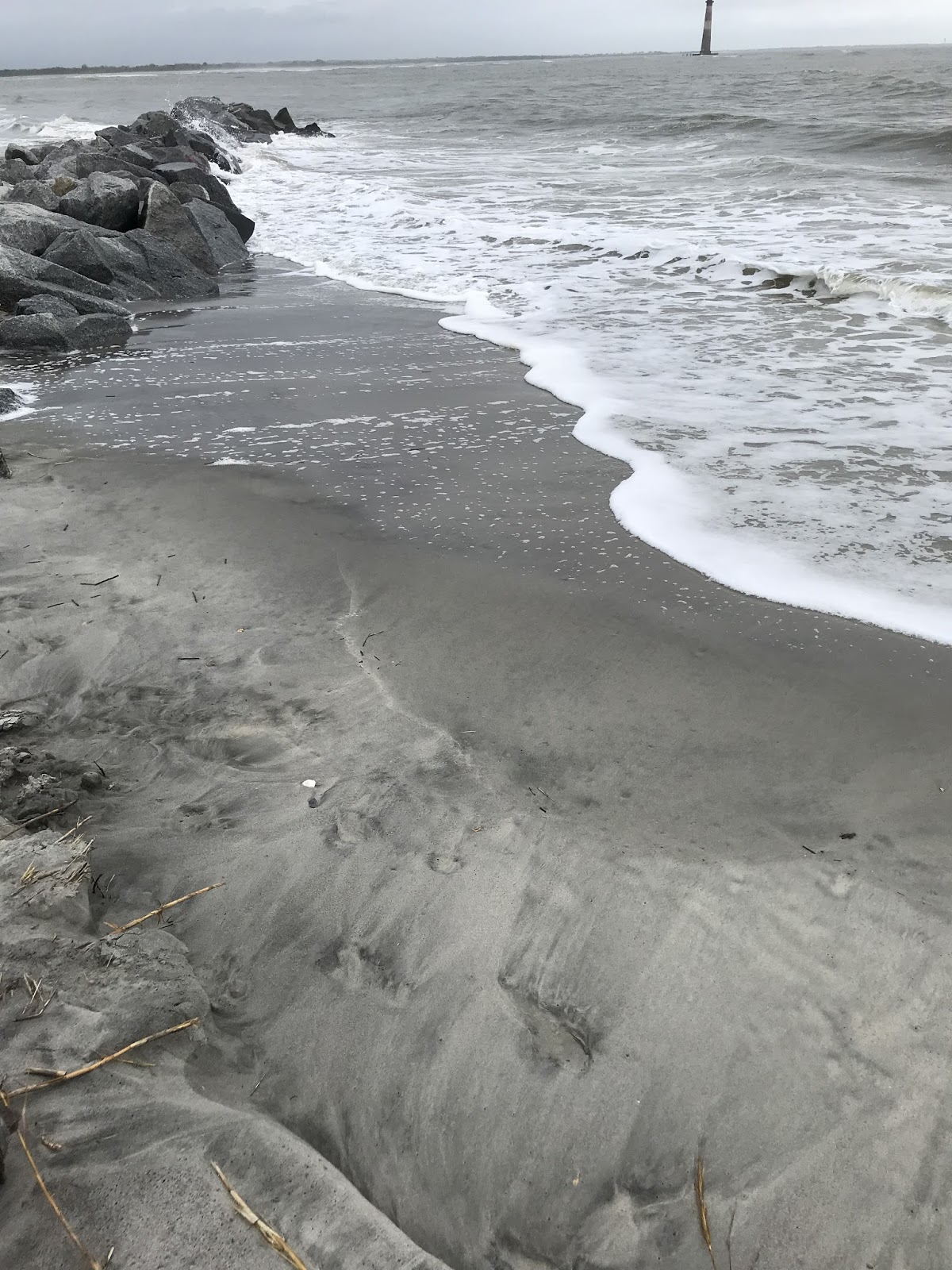
Atlantic Ocean

Lighthouse

Berry on a sea wall

Some tourists on the beach

We really enjoyed our time in the low country. We hope you enjoy our blog.

Robert and Berry

Photos courtesy of rfowler