Friday, October 5, 2018

Tijuana River National Estuary

  The Tijuana River spills into the Pacific Ocean just a thousand feet north of the Mexican border. We birded the Tijuana River bottoms inside the Tijuana River National Estuary and the coastal flats between the Tijuana River outlet to the sea and the well apportioned US Border Patrol area next to the border fence in the tiny International Friendship Park.

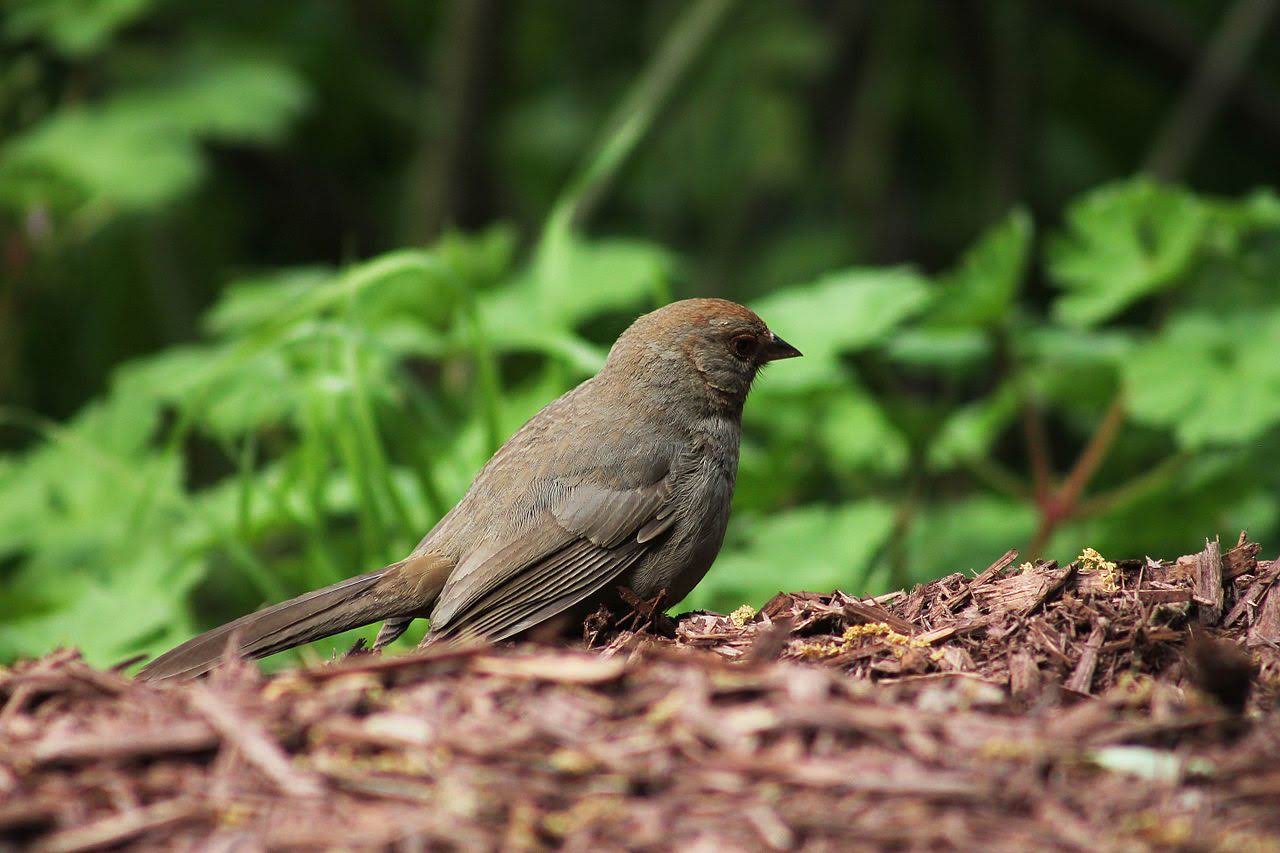
  We were walking down a path, dodging numerous Black Chinned Hummingbirds (Archilochus Alexandri) and Costa’s Hummingbirds (Calypte Costae). The Black Chinned is a genetic hybrid between the Costa’s and the Anna’s. They flit back and forth and up and down, making them more fun to bird. Suddenly, we spotted something pecking on the ground. It was a California Towhee (Melozone Crissalis). This was a Life Bird for us.
  There was a large, thick stand of mature bamboo in the Estuary. We imagined what might be hiding in there. The bamboo was so thick that it squelched out all other plantlife and certainly welcomed no birds. After the bamboo, it was lighter and airier. There was a Purple Finch (Haemorhous Purpureus) perched on a branch twenty feet high. We got closer and studied its red markings.

  There was a great pond inside the Estuary park. We poked through the brush to study the ducks and pelicans. We stepped back out of that viewing spot and found a much better viewing spot next to it. From there we could use our bins to see the entire pond. There was a tangle of branches in the middle of the pond which Snowy Egrets (Egretta Thula) used as a roost. In front of them were three reddish Cinnamon Teals (Spatula Cyanoptera). These handsome birds are a western species which winters in Mexico.

  When we made it to the ocean, we first noticed the terrific waves crashing against the shore. We scanned through four flocks of birds, crouched in the wet sand before us. From left to right, there were dark colored Heermann’s Gulls (Larus Heermani ), Royal Terns (Thalasseus Maximus), gray Willetts (Tringa Semipalmata), and the Marbled Godwit (Limosa Fedoa), which we had seen first in Iceland. Iceland is our website for that birding trip. Marbled Godwits’ beaks have two colors.

  We saw a Mexican boy illegally climbing the border fence, right in front of the cameras, but he climbed back down. I think he was just being a teenager, if you know what I mean. The US Border Patrol flew a helicopter very low next to the beach, scaring the Mexican and the birds. The US Border Patrol has helicopters and vans and hummers and motorcycles and they are armed to the teeth against the drug dealers. We met a large Coyote skulking along the path, heading back to our car. It very much shied away from us. It had obviously smelled two empty pizza boxes which a litter bug had left with a Starbuck’s cup next to a boulder on the path.

  Robert and Berry

  Photos courtesy of wikipedia

Thursday, October 4, 2018

The Famosa Slough

  We birded in the Famosa Slough, a 25 acre wetland inside the city of San Diego. It is a delightful feeding and nesting site for migrating birds, nestled between two apartment complexes and the freeway. There was a dusty walking path around slough with wood benches every so often. We noticed that we were seeing a fair number of migrating birds that are not in this area year-round, making identification of the bird more challenging.

  There were two wading birds perched on the wooden cross tie of an abandoned railroad bridge. One was the Snowy Egret (Egretta Thula) which seems larger here than the same species in northern Mississippi, and then, next to it, a juvenile Black Crowned Night Heron (Nycticorax Nyctiorax). Juveniles oF this species do not resemble the adult bird at all. In order to protect it from predators, genetics make the juvenile a mottled brown, gray and beige mix of colors.

  We have seen hummingbirds frequently on this trip. Today, we saw three Anna’s Hummingbirds (Calypte Anna) darting in and out of a bush that had berries on it. They are relatively easy to spot because they hover in the air. They are not so easy to identify because they never stop moving. In Tennessee, we only have one species of hummingbird, in California, there are six species.

  In some mudflats of the slough there were Lesser Yellowlegs (Tringa Flavipes) wading and bobbing their tails in the shallow water, pecking at yummy insects. They use their bill to stir up a meal in the water.

  Swimming around the slough were male and female Mallards (Anas Platyrhnchos) and Blue Winged Teals (Spatula Discors) This group of ducks is called the “dabbling ducks”. They tip themselves upside down with their head down in the water to nibble grasses and plants on the bottom of the slough. It is really cute to see ducks dabbling in the water with their behinds wiggling in the air.

  For lunch, we stopped at a restaurant on the water named the Red Marlin. It is in Mission Bay, between the San Diego River and the Pacific Ocean. Robert ate a cucumber salad and a hamburger with pickled onions and two jalapeño poppers. Berry had a fruit and cheese plate. We took our Starbucks to a park and took a nap under a tree. We went shopping. Berry got cute long sleeved t-shirts and Robert purchased a pretty dapper hat. Robert napped while Berry watched the Brew Crew beat the Rockies in their best of five baseball series. Dinner at the Blue Water Seafood Grill was Halibut for Berry and Swordfish for Robert.

  Robert and Berry

  Photos courtesy of wikipedia, audubondotcom, flywaysdotcom

Wednesday, October 3, 2018

The East Side of the Bay

  We visited the Sweetwater Marsh National Wildlife Refuge on the east coast of San Diego Bay. This was a beautifully kept piece of beach habitat. We were the only ones there. Robert followed two cars in, but they were employees. We walked halfway toward the bay, when a park employee sped his mule down the path in order to tell us to move our car. He would not let us ride with him because neither of us had a crash helmet. As we walked back to the misplaced car, it dawned on us that the bus we had seen was designed to escort us into the park. We parked in employee parking and went about with our birding.

  We made it to the ocean and immediately saw birds, so we switched into quiet mode. We pulled out binoculars and bird guide and settled into studying what birds there were. It is interesting to contrast the methods by which the various wading birds obtain food. The Reddish Egret (Egretta Rufescens) chases small fish by running left and right, flapping its wings. Berry thought that waving its wings might scare the fish. The Snowy Egret (Egretta Thula) just freezes in place and stares down into the water. Two very different strategies.

  The Black Bellied Plover (Pluvialis Squatarola) and the small flock of Red Knot (Calidris Canutus) dined right where a fresh water creek emptied into the salt water bay. The algae was thick, but the water was moving, creating a bug factory. This situation attracted both species. Neither species were in breeding plumage, so the Black Bellied Plover’s belly was not black and the Red Knots were not red. Birds change color according to the season. In the autumn think drab gray for every occasion. Three colorful avian on-lookers that kept peeping out from under some scrub bush were beautiful, red Song Sparrows (Melospiza Melodia).

  In one part of the bog, a Tricolored Heron (Egretta Tricolor) fought with a Snowy Egret (Egretta Thula) for position, like a basketball player, trying to get closer to fish in the water. We had fun watching them. The Tricolored Heron (Egretta Tricolor) resembles a Green Heron (Butorides Virescens) but it is larger and it has distinctive markings.

  At the most southern side of San Diego Bay are large fish farms, sea turtle habitat and large stretches of open water. There were large flocks of gulls roosting on one of the barriers. Berry and I got the brilliant idea to take LimeBikes©️ for a ride on a bike path through the marsh. We both are sixty-plus years old. What were we thinking? It is a good thing photos were not taken. You download the app and swipe your phone across the fender of the bike. Robert unlocked his lime colored bike and mounted it. Within the space of ten seconds, Robert had fallen into a bush. Berry rolled over to help him and promptly fell on top of Robert. It was ridiculous and absurd. Another bike rider noted that we were alright and rode off with both of us still tangled in the bikes and the bush. No birds were seen during this strange interlude.

  Robert and Berry

  Photos courtesy of danpancamo, wikipedia

Tuesday, October 2, 2018

Birding North of San Diego

  We drove north of San Diego this day to bird at the Torrey Pines beach. Then we drove down a country road in the hills until it stopped at a fence with a gate. Then we drove to Lake Hodges, which they will only let you use on Wednesdays, Saturdays and Sundays. According to the government, Mondays, Tuesdays and Thursdays you may never use the lake. Trout fishing in California is strange. We ate Mexican food and then practiced dodging mountain lions in the Penasquitos Canyon Preserve. More on this later.

  At Torrey Pines Beach we walked along the ocean shore. There were a Vietnamese man and woman fishing from the shore. There were lots of other people ambling about on the sand. The shorebirds ignored the mull of humankind around them. We sifted through lots of gulls to find something new. One large gull with an orange beak we identified was the Heermann’s Gull (Larus Heermani). This was a Life Bird for us.

  California has a large human population. The traffic on the roads in the middle of the day was overwhelming. We found an old country road out in the hills where we could bird in peace. We scanned the phone wires and watched for flitting movement in the bushes. There was a Western Kingbird (Tyrannus Verticalis) perched on a phone line above the road.

  Perched on both sides of the top of a phone pole, we saw two Acorn Woodpeckers (Melanerpes Formicivorus). They were pecking at the top of the pole as if it were, somehow, a tree. It usually takes dead or dying trees to attract woodpeckers, but the Acorn Woodpeckers were hammering at the top of this limbless telephone pole.

  We winded our way to Lake Hodges and the gate to the lake was closed. This was Tuesday, so the lake itself was closed. It was forbidden to park at the lake. We parked across from a restaurant and walked carefully down a path toward the lake. We spotted a Black Phoebe (Sayornis Nigricans) next to the water. We saw Western Grebes (Aechmophorus Occidentalis) on the water. Next to the path were a small flock of the endangered California Gnatcatcher (Polioptila Californica). This was also a Life Bird for us.

  After Mexican food for lunch, we went to the Penasquito Canyon Preserve. It was cool but the sun was out. We walked down a gravel road and noticed paper signs warning us about the presence of mountain lions inside this preserve. Mountain lions are large enough to carry one human into the bush. We counted and we were more than one person. We started studying the trees and a phone line along the road. Then suddenly, Berry walked into a thicket and Robert lost sight of her. Above the thicket we saw a Dusky Flycatcher (Empidonax Oberholseri). This was another Life Bird for us. Fortunately, the mountain lion never appeared.

  Dinner tonight was anything but Mexican food. We went to a steak place and Berry had beef tips and a Caesar Salad. Robert chose a very nice piece of Prime Rib and a loaded baked potato. We went back to the room and watched the Colorado Rockies defeat the Chicago Cubs to win the MLB National League Wildcard game.

  Robert and Berry

  Photos courtesy of wikipedia

Monday, October 1, 2018

Birding South of San Diego

  After breakfast in the hotel, we visited the large Tijuana Estuary, south of San Diego. This is where the Tijuana River spills into the Pacific Ocean. The Sweetwater Summit Regional Park is a low place along the Sweetwater River through the town of Bonita and the Otay Lakes supply water to the city of Chula Vista, south of San Diego.

  At the ocean front, we delighted in watching the Sanderlings (Calidris Alba). These gray and white shorebirds scamper out just as the wave recedes to eat little morsels left by the ocean. When a new wave comes in, they scamper away from the water, only to repeat the process, back and forth, in and out, till they are full. Berry saw a shorebird with an exceptionally long, downward curved beak. It was a Long Billed Curlew (Numenius Americanus) probing the sand for food.

  We walked down a short trail at the edge of the Estuary. Right in front of us on the path a rabbit ran out of the brush and fled when it saw us. We spotted a Says Phoebe (Sayornis Saya) flycatching from his perch on a rock to eat insects.

  We drove along the Sweetwater River. We stopped at the Sweetwater Summit Regional Park. At the entrance to the Visitor’s Center was an unkindness of Common Ravens (Corbus Corax). That is what you call a group of Ravens. An unkindness of Ravens. Continuing down the path, we saw a single Yellow Crowned Nightheron (Nyctanassa Biolacea) feeding beside a small creek. He remained as still as he could, hoping we would not notice him.

  We drove around looking for a place to eat. Finally, we found a place in the old city. There was a market. A Mexican girl sang karaoke in Spanish. We ate dinner, Berry had some Cheese Burritos and Robert had the grilled Mahi Mahi fish tacos. It was dinner.

  Robert and Berry

  Photos courtesy of wikipedia

Sunday, September 30, 2018

A Rare Visitor and a Life Bird

  Today was our first full day in San Diego. For breakfast, Robert ate French toast and strawberries, scrambled eggs with salsa and sausage. Berry had scrambled eggs, bacon, and toast. We used today to orient ourselves to the general area. Robert needed meds so we found a drug store. Berry wanted to go to the beach, so Robert drove her first to Fiesta Beach Park and then to South Mission Beach Park.

  At Fiesta Beach Park we spotted Double Crested Cormorants (Phalacrocorax Auritus) diving and fishing in the bay. We saw plenty of Western Gulls (Larus Occidentalis) perched on buoys and standing in the sand on the beach. There were Laughing Gulls (Leucophaeus Atricilla) and Herring Gulls (Larus Argentatus) in abundance. Berry wondered why there were no peeps picking at the sand on the beach until she found a Willett (Tringa Semipalmata) foraging along the shoreline.

  We drove to South Mission Beach Park where we saw the Pacific Ocean. There were Brown Pelicans (Pelecanus Occidentalis) dive-bombing for fish in the open water. We were delighted to identify some Dickcissel (Spiza Americana) running on the beach. According to the literature, Dickcissells are only a rare visitor to the San Diego area.

  We stopped in a parking lot to watch some sailboats. We saw a Dolphin playing in the water. For lunch we stopped at the Arizona Cafe in Ocean Beach. Robert had the fish tacos and Berry had a hotdog, while watching the Cardinals play the Cubbies on Robert’s phone. While Robert was parking the car, Berry pointed out four Black Chinned hummingbirds (Archilochus Alexandri) hovering near a tree. This was our first life bird of this trip. You should see the web version of this page to view our Life List. It is not seen on the Iphone version of this page.

  For dinner we found an Italian restaurant called the Red Door. They are proud of their hand-made pastas. Berry had the lasagna. Robert tried the Shaved Brussel Sprout and Feta Salad and then had the Short Rib Tortelloni. Delicious. We capped the evening off with Blueberry Creme Brûlée and Vanilla Bread Pudding.

  Robert and Berry

  Photo courtesy of wikipedia

Saturday, September 29, 2018

Birding San Diego

  We got ready to finally take our birding vacation to San Diego. There are supposed to be more than five hundred species of birds in San Diego. After eating pumpkin pancakes for breakfast, we went to the clunky airport in Memphis for our 11:55am United flight to Houston. We there learned that our flight was going to be late, so we had lunch in the Memphis airport. Finally we were on our way.

  Because the plane to Memphis was late, we would miss our connecting flight to San Diego in the Houston airport. We were rescheduled for the 6:40pm flight by the staff in Houston. At that point, things went from bad to worse. The 6:40pm flight was changed to 7:40pm and then changed to “around” 8:40pm. We ate Korean BBQ Ribs and Kale in the Houston airport.

  Passing through Terminal B in the Houston Airport, we saw a small bird flitting around the rafters inside the airport. It was a lonely, juvenile English Sparrow (Passer Domesticus), searching for the food court.

  As we pulled up to the Doubletree, we came to realize that we were more than six hours late. We just got off the Rental Car bus, having listened to a positively rude Californian lady crabbily criticize the citizens of Alabama for their waving at her in the morning. There is no pleasing some people.

  Robert and Berry

  Photo courtesy of wikipedia

Saturday, September 8, 2018

Drought at Riverport

   We need rain. That much was true. Berry and I drove to Riverport Road in Memphis, TN. The series of small ponds to the left, as you are driving in, were all empty of water or covered with scum. We decided to see what was here in the middle of summer in the middle of a mild drought. The US Drought Monitor says it will not last.

   There were about five Bank Swallows (Riparia Riparia) hanging out on the phone wires above the road. We slowed down to watch them play. Further down the wire, we found a couple of Eastern Bluebirds. This bird leaves the wire to capture insects, then flys directly back to its perch on the wire, which is called “flycatching”. Bank Swallows come in groups of five or ten. Eastern Bluebirds come in pairs or come alone.

   We found several Pied Billed Grebes (Podilymbus Podiceps) swimming in one of the ponds. Further down the road, there was a juvenile Yellow Crowned Night Heron (Nyctanassa Violacea), standing in another pond. This bird appears much different as an adult, but as a juvenile, to make the bird more difficult to see, it is a drab beige and gray and white.

   Neither of these, nor the Red Tailed Hawk (Buteo Jamaicensis) perched on one of the tall, electrical pylons, were at all surprising. What did take us back was the paucity of birds at the Riverport Road area during summertime, during a serious drought.

   At the tailing pond of the TVA power plant, we saw several Great Egrets (Ardea Alba) fishing at the edges of the open water. Another was perched on the concrete base of an electrical pylon.

   The birds we saw on this trip include:

  • Canada Goose
  • Barn Swallow
  • Common Ground Dove
  • Great Egret
  • Eastern Bluebird
  • Pied Billed Grebe
  • Yellow Crowned Night Heron
  • Great Blue Heron
  • Double Crested Cormorant
  • Turkey Vulture
  • Red Tailed Hawk

   In a more pleasant year, with at least a moderate amount of rainfall, we would see many more birds and several species of duck, on Riverport Road.

   Robert and Berry

   Photo courtesy of wikipedia,cappeal

Friday, May 11, 2018

Birding at Camille's House

   We left heading for Nashville to celebrate my niece's graduation. My sister let us stay at her place. After storing our gear in a room full of teddy bears, Berry and I walked from the house to a shed at the end of the yard. This farm is situated on a hill inside a deciduous forest. A Red Headed Woodpecker (Melanerpes Erythrocephalus) swooped down from a tree and flew across our path. We saw the white patches on its wings in flight. The birding had begun.

   To our left, a blue male Indigo Bunting (Passerina Cyanea) flew out of the bushes and hovered briefly, flapping his wings vigorously to remain in one spot. This was classic fly-catching behavior. It found an insect and flew back into the bushes. We listened carefully and heard the liquid, waxy whistle of the Indigo Bunting (Passerina Cyanea) which we had heard recently in beautiful Vicksburg, Mississippi.

   The celebration that night was a huge gathering of our extended family. We were served a choice of Barbecued Chicken or Lamb with Mint Jelly. It was great to see everyone when it was not either Thanksgiving or Christmas. A good time was had by all.

   The next morning, my brother-in-law and I got on his Mule ATV and toured his property. We discussed the different birds he might find on his property. He stopped before an open field and looked for birds. There was a Yellow Throated Vireo (Vireo Flavifons) perched on a sapling to our right. It is a yellow warbler with a white and gray rump. I shared my binoculars with my brother-in-law, so he verified this sighting. The bird immediately flew to our right, back into the woods. This is the first time Robert had ever seen the Yellow Throated Vireo (Vireo Flavifons), so this was a "Life Bird" for Robert. At another clearing, we spotted a Summer Tanager (Piranga Rubra) perched on an electrical pylon. Berry was sure to be jealous that she did not come along on this tour of the property.

   My sister and her husband live along the Natchez Trace near Nashville, Tennessee. After breakfast, we took her corgis to the "Timberland Park" and walked them. They are quiet dogs, so we could still bird, without them disturbing the birds. We immediately heard the song of the Eastern Wood Pewee (Contopus Virens), which sound like it is saying, "pee-wee", like its name. Deep in the woods, we heard the beautiful flute-like song of the Wood Thrush (Hylocichla Mustelina).

Here is a List of the Birds we saw at Camille's House
  • Indigo Bunting
  • Yellow Throated Vireo
  • Wild Turkey
  • Red Headed Woodpecker
  • Eastern Bluebird
  • Eastern Wood Pewee
  • Wood Thrush
  • Bluejay
  • American Robin
  • Summer Tanager
  • Carolina Wren
  • Turkey Vulture
  • Black Vulture
  • Red Tailed Hawk
  • Brown Thrasher

   We left them at the park and drove down the Natchez Trace to Leiper's Fork. There were cute shops and an art gallery there. We stopped at Puckett's for a bite, then headed back to Memphis.

Robert and Berry

Photos courtesy of rfowler, wikipedia

Saturday, May 5, 2018

Birding the Old Forest State Natural Area

   For breakfast, my wife ate a homemade Apple Turnover. The pieces of apple had been diced small so that the apple would bake correctly and be soft, but not mushy, the way Berry likes it. Robert had his usual bowl of fruit. This was a Saturday. We decided to go birding. Robert suggested Overton Park in midtown Memphis. This is a large urban park with a nine hole golf course, an Art College and a municipal Zoo. Part of the park is a beautiful deciduous forest, deep and heavily clogged with underbrush. We pulled the bird-mobile to the curb near the golf course and parked the car. It was only then that we noticed that the name of the forested part of the park had been changed. It is now called "The Old Forest State Natural Area".

   In the park, we started birding by walking on a paved road. Berry spotted the first bird we saw to the right of the road in the branches of a tree. Robert used his binoculars to identify it as the Yellow Rumped Warbler (Setophaga Coronata). He saw a brownish gray warbler scrambling from limb to limb. What made the identifiction was a bright yellow spot on the rump of the bird. We also saw this little fellow in Mexico when we birded the Yucatan Penincula in October of 2006.

   We turned away from the paved road and started walking carefully along the side of the fairway of the fourth hole. There were Indigo Buntings (Passerina Cyanea) and Northern Cardinals (Cardinalis Cardinalis) playing on the green of hole number four. The Cardinals say "purdy, purdy, purdy..." The Indigo Buntings have a very distinct, liquid whistle. We stood still and watched them putt. When it was time to play through, Robert spotted a small flycatcher, perched on a bare limb on a sapling. He had just found a Least Flycatcher (Empidonax Minimus). This handsome flycatcher was our bird of the day.

   We walked through the woods to the green on hole number two. We saw a lot of other birds during this short birding trip, and lots of dogs. It is primarily a city park, so the dogs were all on leash. It started to rain. To avoid the sprinkles, we walked to the car. It stopped sprinkling just as it had started. We gave up and drove to a restaurant and ate lunch.

Robert and Berry

Photos courtesy of rfowler, allaboutbirds, dpancamo