Monday, September 28, 2015

Birding Our Way to Tucson

   After a three and a half hour cross-country flight, we finally landed in Phoenix, Arizona, got a hotel room and ate dinner at a very nice Thai restaurant. The next morning, we got up at 5am, packed the car, grabbed breakfast at an all-night Ihop and drove east toward the Tonto National Forest. This large forest is almost three million acres of very rugged terrain. We saw hundreds of the very large Saguaro cacti along the dusty mountain road.

   At the Lost Dutchman State Park, we saw a small flock of Gambel’s Quail (Callipepla Gambelii). They were all very colorful and cute with their double “topknot”. We did not see any of them fly; they all ran on the ground and quickly scatter when approached. They seemed somewhat thinner than the quail we see back at home.

   Going further east on the mountain road, we were driving slowly to avoid damage to the rental car; the road was unpaved, with rocks and stones and gravel. The road had been grated, such that if Robert drove fast at all, the chassis of the vehicle would rattle. Suddenly we spotted a large hawk standing on top of one of the Saguaro cacti. Using our spotting scope we identified the Harris’s Hawk (Parabuteo Unicinctus). There were a pair of them. They are totally black with chestnut brown shoulders and long, yellow legs with a yellow beak.

   No trip out west would not be complete without a Greater Roadrunner (Geococcyx Californianus). We saw one running across an empty parking lot near a boat ramp. Another bird we saw was the Ladder-Backed Woodpecker (Dryobates Scalaris) on a utility pole.

   We continued east through the Superstition Mountains. To our right we saw the large white “spot light” on the rump of a Gilded Flicker (Colaptes Chrysoides).

   We spotted the Arizona state bird, the Cactus Wren (Campylorhynchus Brunneicapillus). The Cactus Wren is the largest of our wrens. It seemed to be less shy than most wrens. It has a large easily seen white supercilium eye stripe. Contrasted to the Carolina Wren, this one was easy to identify.

   After a wonderful morning of birding, we ate lunch in the very small town of Tortilla Flat, AZ. Berry enjoyed the prickly pear cactus gelato. Robert asked the cook for tips on cooking their famous Fried Mac and Cheese ( you freeze the mac-n-cheese first). The afternoon was spent driving to Tucson and studying the various species of cacti. Below are photos of some of the cacti we saw today.

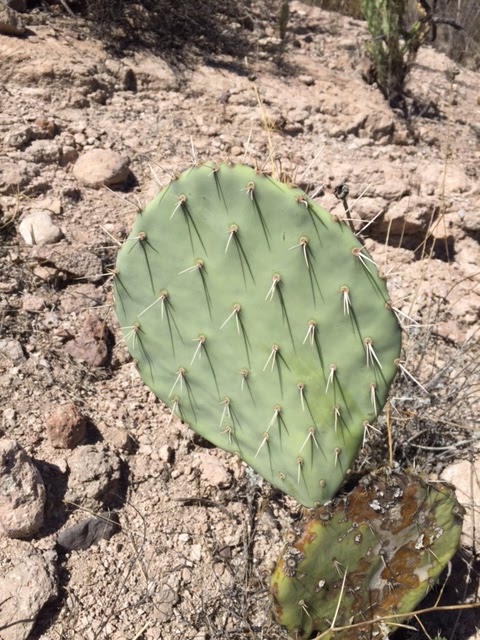
   Many people do not know is that Berry was born in Tucson, Arizona. It is great to be home again.

Robert and Berry

photos courtesy of wikipedia and rfowler

Saturday, September 12, 2015

A Beautiful Late Summer Day of Birds

Robert and I wanted to go on a picnic. We bought some KFC chicken and put it in the icebox, next to the German mustard potato salad. Celery sticks with cream cheese and cold drinks. The sun was out and the temp was cool. The wind was heavy, due to the cool front which had come through recently. We birded around Arkabutla Lake, in northern Mississippi.

We saw several huge American Crows (Corvus Brachyrhynchos), perched on the railing on the dam. There were Red-wing Blackbirds (Agelaius Phoeniceus) in a tree beside the spillway. We saw a Mourning Dove on a powerline. There was a Great Blue Heron (Ardea Herodias), standing in the water next to several Great Egrets. We drove by a very large Turkey Vulture which was eating roadkill next to the road.

After driving through a couple of the picnic and camping areas, we saw a Ruby-Throated Hummingbird (Archilochus Colubris) battling the wind. He was fighting to move forward in the heavy wind and at times it looked like it was suspended in mid air. Sometimes we see hummingbirds hovering over our flowers at home.

From the spillway, we proceeded across the dam where we saw Double-Crested Cormormants (Phalacrocorax Auritus) sunning themselves on the bouys in the water. At a nearby campground, while Robert was looking up the Pine Warbler (Setophaga Pinus) he had seen in the Sibley’s Field Guide, Berry pointed out a beautiful White-Breasted Nuthatch (Sitta carolinensis), walking upside down on the trunk of a tree. This Nuthatch turned out to be the bird of the day.

White-Breasted Nuthatch

The White-Breasted Nuthatch (Sitta carolinensis) is a small songbird of the nuthatch family which breeds in old-growth woodland across much of temperate North America. It is a small, stocky bird, with a relatively large head, short tail, powerful bill, and strong claws. The White-Breasted Nuthatch forages for insects on the trunk and branches of large trees. Its feet are made so that it can walk head-first down the side of a tree without falling. We enjoyed this Nuthatch for several minutes as he went up and down the tree trunk.

Moving on, we stopped close to a boat ramp and saw a flock of large Canada Geese (Branta Canadensis) finding shelter from the wind in a cove. In among the geese, Robert saw a single Green Heron fishing from his perch on a half submerged limb in the water. In the trees above us, two Red-Headed Woodpeckers (Melanerpes Erythrocephalus) were “fussing” with each other, squawking loudly. Probably a territorial conflict, but who knows, really.

We went from the campground to Bayou Point, a special area for the two of us. At Bayou Point Robert proposed to me on Easter and I accepted. This small peninsula has special meaning for us. We spread out our picnic lunch and enjoyed ourselves, the cool wind, the delightful sunshine and the large stretch of lake water in front of us. At our picnic area, we watched a juvenile Red-Headed Woodpecker (Melanerpes Erythrocephalus) perched on a limb in a tree and a beautiful Mississippi Kite (Ictinia Mississippiensis) soaring above us in the wind.

After eating lunch we walked around the little peninsula. There was a large bee hive in an Oak Tree. There were bees tending to it. Robert took a picture of it with his IPhone. Look in the tree next to the trunk, about twenty feet high. It is the large beige basketball sized thing in the tree.

Bee Hive

It was fun to be out, away from work and computers. On the way to the expressway, we pasted a flock of around 75 Great Egrets (Ardea Alba) in the Coldwater River run-off. Below is the complete list of the birds we saw today.

  • American Crow (Corvus Brachyrhynchos)
  • Red-Winged Blackbird (Agelaius Phoeniceus)
  • Pied-billed Grebe (Podilymbus Podiceps)
  • Canada Geese (Branta Canadensis)
  • Turkey Vulture (Cathartes Aura)
  • Blue Jay (Cyanocitta Cristata)
  • Eastern Kingbird (Tyrannus Tyrannus)
  • Great Blue Heron (Ardea Herodias)
  • Mourning Dove (Zenaida Macroura)
  • Great Egret (Ardea Alba)
  • Bank Swallow (Riparia Riparia)
  • Ruby-throated Hummingbird (Archilochus Colubris)
  • Northern Mockingbird (Mimus Polyglottos)
  • Double-crested Cormorant (Phalacrocorax Auritus)
  • Pine Warbler (Setophaga Pinus)
  • White-breasted Nuthatch (Sitta Carolinensis)
  • Green Heron (Butorides Virescens)
  • Red-headed Woodpecker (Melanerpes Erythrocephalus)
  • Mississippi Kite (Ictinia Mississippiensis)
  • American Kestrel (Falco Sparverius)

What a wonderful day!! We are ready fro our vacation to Arizona at the end of September.

Robert and Berry

photos courtesy of wikipedia

Wednesday, June 24, 2015

Orlando in June

I followed my wife to Orlando, Florida. She has a business meeting and I could stay in the hotel with her. This is a large convention hotel with hundreds of rooms, several swimming pools and a golf course attached to it.

After one of my wife's events, I caught up with her and we walked outside to a small pond next to the golf course. Berry wanted to see an alligator but none appeared. We are experienced birders, so we did indeed see several nice birds as we walked behind the convention hotel.

In the weeds in the pond next to the cart path, there was a Limpkin (Aramus guarauna). This one had avoided being eaten by an alligator.

Also, during this walk around the convention center, we saw four Sandhill Cranes, two White Ibises, one Little Blue Heron and several Common Moorhens.

Robert

the photo courtesy of wikipedia

Saturday, May 2, 2015

A Beautiful Day in May

We birded the Riverport area in Memphis, Tennessee. At the bridge over the Nonconnah River, we saw a flock of Cliff Swallows (Petrochelidon pyrrhonota) swarming from nests under the bridge. In the water of the river, we saw turtles swimming to the left and several gars, a type a fish, swimming to the right.

We saw Eastern Kingbirds (Tyrannus tyrannus) perched on a wire. They would divebomb prey and then return to their perching place.

At a small muddy water hole, we identified the Solitary Sandpiper (Tringa solitaria), standing in the sun and pecking at the mud. They shared the water hole with the slightly larger Lesser Yellowlegs (Tringa flavipes).

Berry always remarks the arrival of the Dickcissel (Spiza americana). It was a beautiful day in May at Riverport Road.

Robert

photos courtesy of wikipedia

Wednesday, December 31, 2014

Birding New Year's Eve in the Deep South

We got up this morning with no rain, which was a relief, but very cool temperatures, which required sweatshirts. There is a big difference in temperatures between the Gulf of Mexico and northern Louisiana. Today we donned our thermal underwear and left Baton Rouge, heading west to the Atchafalaya National Wildlife Refuge. The refuge is a globally important birding hot spot, but the road through the middle of the refuge was gravel and full of very deep holes that held water.

Some really attractive birds we saw today that we had not seen so far on this trip were the Pine Warbler (Setophaga Pinus), the Field Sparrow (Spizella Pusilla), and the Broad Winged Hawk (Buteo Platypterus). As we were leaving, we witnessed a huge flock of Snow Geese (Chen Caerulescens) in V formations in the air, swirling above a soggy field. Thousands of birds. It was magnificent to see.

After leaving Atchafalaya, we drove to the little town of Alexandria to eat lunch. Robert had Shrimp Skewers with eight Cajun sauces. Berry had the Catfish, which she enjoyed. After lunch, we went northeast toward Monroe, Louisiana. We stopped on the way at the Catahoula National Wildlife Refuge. Again, we were driving on an unpaved road, but we found birding "Honey Pots", places where birds flitted back and forth in the sun. It was fun. Berry did not want to toot her own horn, but she identified a small flock of Yellow Throated Warblers (Setophaga Dominica) in the trees on the bank of a canal. These jewels were Life Birds for us. We had never before seen and identified them.

Other birds we saw were the Eastern Phoebe (Sayornis Phoebe), Great Blue Heron (Ardea Herodias), Carolina Chickadee (Poecile Carolinensis), American Crow (Corvus Brachyrhynchos), Mourning Doves (Zenaida Macroura), and a Red Shouldered Hawk (Buteo Lineatus). From Catahoula we made our way to Monroe, Louisiana were we got a hotel room for the night.

Because it was New Year's Eve, we had to go to a couple of resturants before we could get a table without a very long wait. We had dinner at the Mohawk Tavern Seafood Restaurant. The food was good. Robert had the Halibut Special and Berry had the Stuffed Crab. We returned to our hotel and celebrated the New Year in together.

Happy Birding to everyone !

Robert and Berry

photo courtesy of avaianphotography

Tuesday, December 30, 2014

Bayou Gauche and Beyond

Another beautiful day birding in Louisiana. We got up early and drove through the Bayou Gauche, near the little town of Luling, where we stayed last night. There is water, water everywhere in the state of Louisiana...and in the bayous, only more so. We also got to poke around some Cajun places today, listening to the Cajun accent and sampling the Cajun cuisine. A good time was had by all. We enjoyed ourselves today.

The Bayou Gauche is composed of long stretches of weedy channels intersperced by small islands or peninsulas of solid ground with water on it. We tried to decide whether to call it "bogs" or "swamps" or "wetlands". The local people here live in wet houses and have puddles of water in their front yard. There is no skiing in the lake, because the water is full of brambles and is not deep enough or long enough to ski. Fisherpeople flock to Louisiana and with good reason. There are plenty of fish inside the bayou.

We saw Fish Crows perched on a telephone line. Fish Crows are smaller than the American Crow and something about the beak made it easy to identify. We saw several Red Shouldered Hawks with their beautiful orange breasts and its harsh call which frightened the smaller birds. We saw Meadowlarks on the levee of the Mississippi River. There was a Northern Harrier hawk buzzing just above the ground, to get a surprise attack on any prey item on the ground. The Northern Harrier is easily identified by the spotlight of white feathers on its rump when it flies. We saw an Eastern Wood Pewee on a power line. We usually hear that bird before we see it.

There were plenty of White Ibises in the soggy fields. They use their long, red, curved bills to probe the mud for nibbleables. Gulls are difficult. The one gull which we are very comfortable identifying is the Ring Billed Gull. The Laughing Gull is easy to tell by its laughter, but birds usually do not call out to birds of the other sex until springtime. They stay pretty quiet until then.

All along the western levee of the Mississippi River we saw hundreds of American Kestrel, male and female, and the Loggerhead Shrike. These two hunting birds were stationed one per segment of telephone line, for miles and miles. The kestrels would swoop down from the wire and grab something like a mole or a field mouse on the ground. The Loggerhead Shrike feeds on smaller things like fuzzy caterpillars and has the macabre predilection to impale the cadavers on thorn bushes and the tops of chain link fences. Berry and I have never seen so many Loggerhead Shrikes and American Kestrels.

Robert and Berry

photo courtesy of wikipedia

Monday, December 29, 2014

A Peninsula into the Gulf of Mexico

Today was the best birding day of our vacation so far. We left the downtown area of New Orleans this morning and drove slowly down the western bank of the Mississippi River. The sediment over thousands of years formed a long peninsula about 60 miles into the Gulf of Mexico. Today's birding trip proved our assertion that birding is not about the final destination, but about the journey along the way. Our slow motion car trip down this peninsula into the sea yielded two new life birds for us, the Stilt Sandpiper (Calidris Himantopus) and the Cape Sable Seaside Sparrow (Ammodramus Maritimus Mirabilis). This was a great day.

There is a wildlife area at the end at the end of the peninsula to provide sanctuary and habitat to wintering waterfowl. The entire peninsula took a direct hit from Hurricane Katrina. Marsh and beach areas were eroded, trees were blown down or damaged, and vegetation was stressed by saltwater intrusion. Despite all of this, we saw today hundreds of beautiful White Ibis, both white adults and brown juveniles. We found several Common Snipe mingling among the Greater Yellowlegs next to some shrimp boats. Because they eat fish, we kept seeing Ospreys, also known as Sea Eagles, all day long. We have Black Necked Stilts in Memphis and they also have them here. What charmed us more than most were the small white Cattle Egret whose courting plumage was tinged in orange. Right next to the water's edge, tiny Sanderlings trotted up and down, checking the foam for tidbits.

The peninsula had a great many orange trees. We were surprised, frankly, that many of the actual oranges were still on the trees this late in the year. About half way down the peninsula, there was the ancient Fort Jackson. It was a battle site in the American Civil War. We drove around the property slowly and looked at birds.

Another great place along the peninsula was next to some shrimp boats. Not on the boats themselves, but in a muddy field right next to the shrimp boats. There were a lot of birds feeding in the wet grass and mud holes there. I saw two Boat Tailed Grackles nibbling cleverly at seafood which remained inside fishing nets that were hung next to a shrimp boat.

You might not think about it, but some of the best birding is done in empty lots next to busy buildings. Or behind stores or in schoolyards. We saw hundreds of White Ibises next to an idle crude oil spigot. The Ibises flew inside the fence and munched goodies in the grass and disturbed no one. No one but us even noticed.

Robert drove very slowly down the peninsula, making innumerable stops at a thousand birding spots. We turned around and Berry drove back up the peninsula at the speed limit. After a long, very pleasant day, we got a hotel room at the Cypress Inn Hotel in Luling, Louisiana.

Robert and Berry

Photo courtesy of wikipedia

Sunday, December 28, 2014

Bayou Sauvage National Wildlife Refuge

This morning we got up and were excited to notice that it was not raining, as it had been predicted by the Weather Channel last night. The atmosphere was densely foggy all morning, but it burned off around noon. After breakfast, we drove across a draw bridge spanning Lake Pontchartrain from the city of Slidell to the Bayou Sauvage National Wildlife Refuge. Bayou Sauvage is in the eastern portion of Eastern New Orleans. Most of the refuge is inside massive hurricane protection levees, built to hold back storm surges and maintain water levels in the low-lying city.

Many waterfowl migrate south to New Orleans and spend the winter in the Bayou Sauvage marshes. Some of the birds that we saw included the Common Merganser with their large brown crests, the Ruddy Ducks who kept diving while we scoped them, lots of Scaup, and a pair of Bufflehead. We also identified the cute little Pied Billed Grebe and several clunky Common Moorhens. Waders included the golden footed Snowy Egrets, the larger Great Blue Herons, the Little Blue Herons, the Green Heron, and the White Ibis. The Double Crested Cormorants were numerous. The Loggerhead Shrikes were more numerous than expected. We saw Belted Kingfishers and lots of Northern Harrier.

The Brown Pelican is an endangered species and is a year-round resident at the Refuge. We saw several Brown Pelicans as well as American White Pelicans while exploring today. We looked for alligagtors, but did not see any today.

Leaving the Refuge, we drove in to New Orleans and had lunch at Mandini's. After waiting over thirty minutes for a table, Robert had the Gulffish LaFitte with green beans, and Berry had the Creole Eggplant and a side salad. We took a serving of bread pudding To-Go for use later tonight. We explored New Orleans after lunch until it started getting dark, then got a hotel room in the downtown area. Tomorrow we head to the ocean.

Berry and Robert

Saturday, December 27, 2014

Birding the Delta National Forest

We started out this morning in Yazoo City, MS with the gray sky full of ominous clouds. We grabbed coffee and drove deep into the forested wetlands of Delta National Forest. We also enjoyed the hardwood forests of the Sunflower Wildlife Management Area. The Delta National Forest is 60,115 acres in the Yazoo Basin of the Mississippi River. It lies just north of Vicksburg. We found the main road to be crowded with camouphlaged deer hunters with their pick-ups and muddy four-wheelers. The forest was huge and we could easily get away from the mighty hunters and do our birding in relative solitude.

The sky looked threatening all day long, but it did not rain heavily while we were actually birding in the forest. Because of the sprinkles we birded mostly from the car. Berry stared at some branches on her side of the car. She quietly whispered to me the word, "tow-hee" and gestured to her right. There was a delightful white-eyed Eastern Towhee staring back at me.

Some other birds we saw today were :

  • Black Vulture
  • Common Tern
  • Loggerhead Shrike
  • Eastern Bluebird
  • Tufted Titmouse
  • Wood Duck
  • Yellow Bellied Sapsucker
  • White Eyed Eastern Towhee

After a wonderful morning of birding, we drove to Vicksburg, MS and had a very nice lunch in the downtown area. Robert had Cajun Catfish with Roasted Corn and Berry had the Seafood Lasagna. Yum, yum! Topped that off with Bread Pudding and Ice Cream. As we were leaving the resturant, it stated to rain. Immediately after we got into the car, the bottom dropped out ot the sky with heavy, driving rain. We were quite lucky that we were able to stay dry.

The rain continued for the next several hours as Berry drove across southern Mississippi down to Slidell, Louisianna, where we got a hotel room for the night. We ate dinner at a local resturant and again had very good food. Robert put Cajun hot sauce on his salad. Berry ate Grilled Tuna and Stuffed Mushrooms. Robert dipped his Ribeye into Berry's Spicy Remoulade Sauce.

According to the Weather Channel, there is a 70% chance of rain tomorrow. When it rains and the sky is difficult, birds light on limbs and on the water's surface. In birding, this is called "Fall-Out". We are stoked for a great day of birding tomorrow.

Robert and Berry

Friday, December 26, 2014

On the Way to Yazoo City

This morning before leaving Memphis on a birding vacation south to New Orleans, we left Cosmo the dog at the Pleasant View Kennel, where we are comfortable with the handlers. We got our rental car, a snappy Volkswagon Jetta and headed south on Interstate 55 which goes through Mississippi towards New Orleans. Plan A for today was to bird our way down to Yazoo City, MS and stay there for the night. Plan B was to continue tomorrow morning on the way to New Orleans.

Birding at 70 miles/hour on the expressway is difficult, so we got off of the expressway at Batesville, MS and drove the rest of the day on the smaller state highways. There we saw a huge flock of white and black Snow Geese in the tall grass of a farmer's field. There were more than a thousand birds in the flock. The Snow Geese were either a white morph (totally white) or dark morph (black/gray and white). We got out of the car and studied the whole field. We pulled our spotting scope from the trunk. There were plenty of room to use it in the huge flock we saw spread out before us.

On the power lines next to the road, we saw lots of American Kestrel. Thes birds bounce their tails as they balance in the wind. We love to see the feathers on the side of its head look like Elvis' sideburns. Robert made a joke about seeing one holding a guitar.

After eating lunch in Clarksdale, MS we drove the rest of the afternoon to Yazoo Coty and arrived around 4pm. Birds we saw along the highway were:

  • Black Vulture
  • Great Blue Heron
  • American Kestrel
  • Northern Harrier
  • Red Tailed Hawk
  • Loggerhead Shrike
  • Killdeer
  • Mallard
  • Mourning Doves
  • Common Grackles
  • Belted Kingfisher
  • Ringed Billed Gulls

    We got a room in Yazoo City. We were tired, so we walked across the parking lot and ate really mediocre Mexican food for dinner. The salsa was bland. We finished and went back to the hotel.

    We are having trouble uploading the pictures to this blog.

    Robert and Berry